

Pilates for Beginners at Home: Your Winter Wellness Guide for Australian Women
Pilates for beginners at home is one of the smartest ways Australian women can build strength, improve posture, and stay active through winter — no gym required. This guide breaks down a 5-move starter routine, answers the most common beginner questions, and shows you exactly what to wear on the mat.
TLDR
- Pilates for beginners needs zero equipment — a mat and 20 minutes is all it takes
- Winter is the ideal time to build an indoor movement habit that actually sticks
- Practice 3 times per week and expect to feel a real difference within 4–6 weeks
- Pilates is safe and beneficial for women after pregnancy
- Form-fitting activewear helps you move freely and check your alignment
Why Winter Is the Best Time to Start Pilates for Beginners in Australia
June in Brisbane means cooler mornings and the temptation to stay wrapped up rather than head outside for a run. That is exactly why pilates for beginners at home is such a smart move right now. You roll out a mat in your living room, put on a warm layer, and get a full-body workout in 20–30 minutes without leaving the house.
Winter is also when most fitness habits fall apart — but pilates does not demand anything extreme. The movements are low-impact and controlled, which means you can keep showing up even on the days you feel stiff or tired. Build the habit now and by the time spring arrives, your body will feel entirely different.
What Exactly Is Pilates?
Pilates is a system of controlled, low-impact movements that builds core strength, improves posture, increases flexibility, and sharpens body awareness. Joseph Pilates developed the method in the early 1900s — originally as a rehabilitation tool — and it has since become one of the most popular movement practices for women worldwide.
Unlike high-intensity training, pilates works with your body instead of pushing against it. Every exercise connects your breath to movement, which builds strength from the inside out. For women at any fitness level, it is one of the most functional and sustainable forms of exercise available.
5 Beginner Pilates Exercises to Try at Home Today
Roll out your mat and work through this 5-move starter routine. Perform each exercise for 10–12 reps, rest 30 seconds between moves, and complete 2 rounds.
1. The Hundred
Lie on your back, bring your knees to a tabletop position, and lift your head and shoulders off the mat. Pulse your arms up and down with control while breathing in for 5 counts and out for 5 counts. This is the classic pilates warm-up — it fires up your deep core immediately and teaches you breath-to-movement connection.
2. Single Leg Circles
Lie flat on your back, extend one leg toward the ceiling, and draw slow, controlled circles in the air with your toes. Keep your hips completely still. This exercise works your hip flexors, inner thighs, and deep core while building the hip stability that supports everyday movement.
3. Roll Up
Start flat on your back with arms extended overhead. On an exhale, roll your body up slowly — vertebra by vertebra — into a seated forward fold, then reverse with the same control. This replaces traditional crunches and trains your abdominals through a full range of motion.
4. Side-Lying Leg Lifts
Lie on your side, stack your hips, and lift the top leg to hip height. Lower with control. After 12 reps, switch sides. This targets your outer thighs and glutes and builds the lateral stability you need for more advanced pilates moves.
5. Swan (Mini Back Extension)
Lie face down with hands placed under your shoulders. Press gently into your palms and lift your upper body off the mat, keeping your lower back long and your glutes relaxed. This counteracts hours of sitting, opens your chest, and feels wonderful. Hold for 2–3 breaths and lower slowly.
How Many Times a Week Should a Beginner Do Pilates?
Three sessions per week is the sweet spot for beginners. That frequency gives your body enough stimulus to adapt and grow stronger while allowing full recovery between sessions. You do not need to spend an hour on the mat — a focused, deliberate 20–30 minute session delivers real results.
Consistency matters far more than intensity, especially in the first few months. Three honest sessions per week, every week, will outperform one long session done here and there every time.
What Do You Need to Do Pilates at Home?
A good-quality mat is the only essential. A yoga mat works fine, though a slightly thicker option (6mm or above) adds extra comfort during spinal exercises. Beyond that, beginners need nothing — no reformer, no resistance bands, no weights.
Your environment matters more than your gear. Find a clear space with enough room to fully extend your arms and legs, choose a consistent time of day, and protect that window. Many Australian mums find early-morning sessions before the household wakes up the easiest to protect — and pilates is gentle enough that you can ease into it even before a coffee.
How Long Does It Take to See Results from Pilates?
Most beginners feel a difference within two weeks — better posture, less tension in the back, and a stronger connection to the core. Visible physical changes typically appear within 4–6 weeks of consistent practice.
Joseph Pilates himself famously put it this way: "In 10 sessions you will feel the difference, in 20 you will see the difference, and in 30 you will have a whole new body."
Stick with it. The results are real, and they compound.
Is Pilates Good for Weight Loss?
Pilates builds lean muscle, which raises your resting metabolic rate over time. It is not a high-calorie-burn workout in the way that running or HIIT is, but it absolutely supports a healthy body composition alongside good nutrition and regular activity. For many women, the biggest win from pilates is not the number on the scale — it is the way they feel in their body. Stronger, more upright, and far more confident.
Can I Do Pilates After Having a Baby?
Yes. For many women, it is one of the best places to start. Pilates strengthens the pelvic floor and deep core muscles — exactly the areas that need attention after pregnancy and birth. Always consult your GP or women's health physio before you return to exercise postpartum, but gentle mat pilates is widely recognised as one of the safest and most effective movement practices for postpartum recovery.
As a brand founded by a mum of four, we understand that movement looks different in every season of life. Pilates meets you exactly where you are and asks nothing of you except showing up.
What Should I Wear to Pilates at Home?
Form-fitting activewear is the best choice for pilates. When you can see the lines of your body, you can check your alignment — and that means you get more out of every movement. Baggy clothing makes it harder to notice when your hips are off-level or your shoulders are creeping up toward your ears.
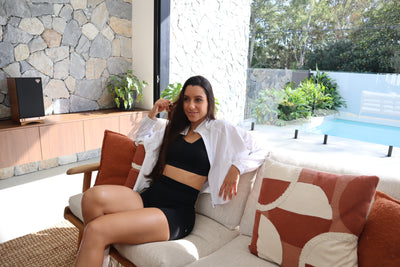
For winter home pilates sessions, the answer is layering. Start your warm-up in the Luxe Layer Fleece Jumper — it is cosy enough to hold warmth on cool mornings but relaxed enough to move with you through every exercise. Once you heat up, peel it back and work through the main routine in a form-fitting top. The Lara Ribbed Fit Top is a beautifully structured option that stays in place through floor-based work and shows you exactly where your body is in space. Pair with the Lara Pattern Tank for a layered look that takes you from mat to school drop-off without a second thought.
Premium activewear is not a luxury for a home workout — it is a tool. When you feel good in what you wear, you show up more consistently. That is what unleashing your inner fox looks like.
Ready to Elevate Your Winter Wellness?
Starting pilates at home is one of the boldest, most empowering choices you can make for your body this winter. Three sessions a week, a clear space, and the right activewear — that is all you need.
If you want personalised guidance on building an activewear wardrobe that supports your movement goals, book your free personal styling session with the Sunfox Active team. We match you with pieces that fit your body, your lifestyle, and your winter pilates practice — so you always feel like your strongest self on and off the mat.